
Not All Play Is Good Play: Knowing When Your Dog Has Had Enough
At Waggy Warehouse, we love seeing dogs play, socialise, and enjoy themselves — but one of the biggest misconceptions we see is that all play is good play.
The reality is, play can very quickly tip over into overstimulation, and when that happens, things can escalate fast.
An overstimulated dog isn’t a “naughty” dog — it’s a dog that has simply gone past its threshold.
What Is Overstimulation?
Overstimulation happens when a dog becomes too excited, overwhelmed, or unable to regulate their behaviour. This often builds gradually and, if not recognised early, can lead to:
Rough or inappropriate play
Ignoring cues from other dogs
Excessive barking or frantic behaviour
Jumping, mouthing, or loss of manners
In some cases, tension or aggression
This is why it’s so important to recognise the signs before it escalates.
Signs Your Dog May Be Getting Overstimulated
Dogs rarely go from calm to chaos instantly — they give us signals along the way.
Some common signs to look out for:
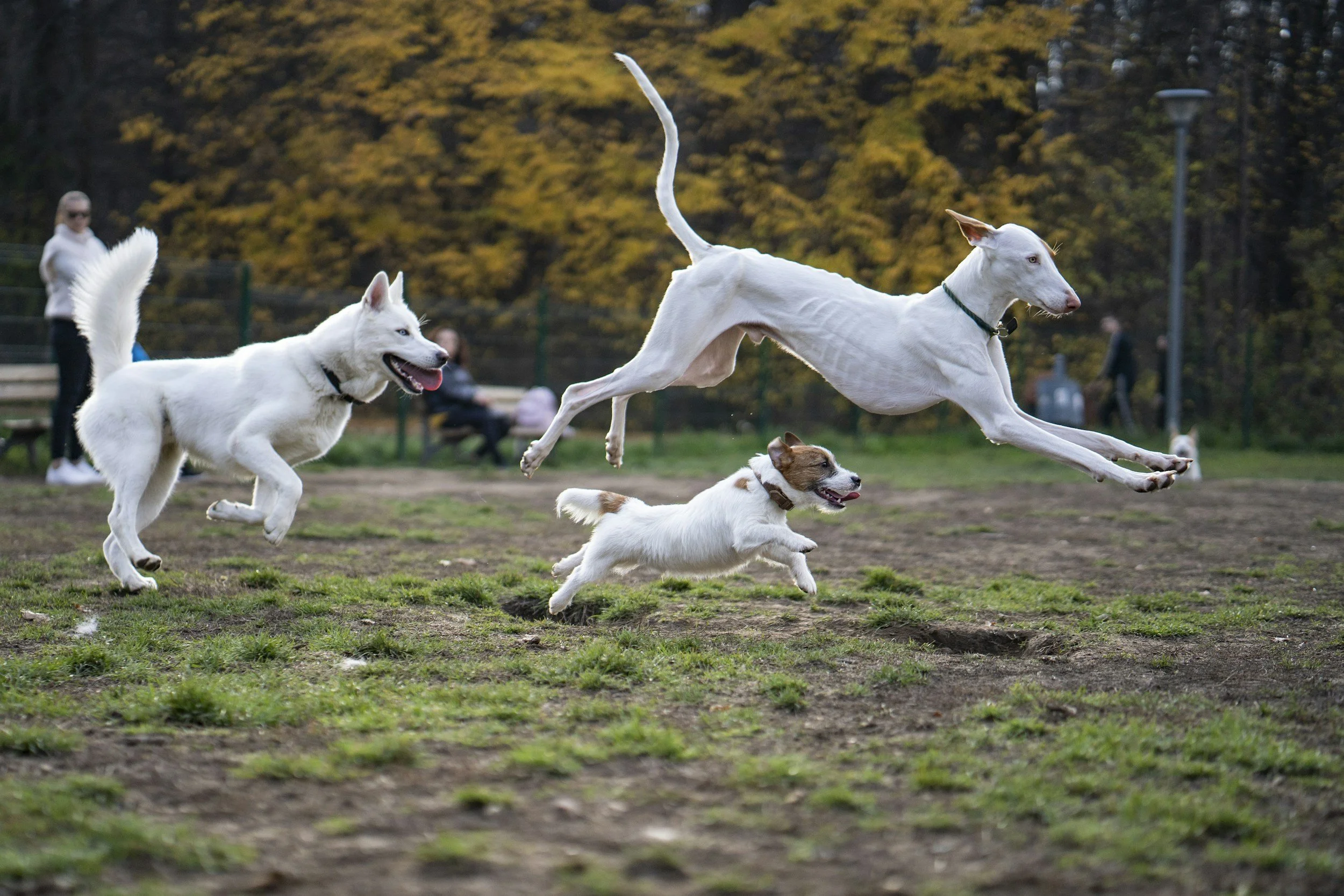
Play becoming faster, more intense, or one-sided
Repeatedly targeting the same dog
Not taking breaks or ignoring recall
Over-the-top body language (zoomies that don’t settle, constant chasing)
Barking becoming sharper or more persistent
Difficulty listening or responding to you
At this stage, your dog isn’t being disobedient — they’re struggling to regulate themselves.
What To Do Before It Goes Too Far
The key is intervening early — before things spiral.
Here are some simple ways to help your dog reset:
Call them out for a break
Even a short pause can help bring their arousal levels down.
Change the activity
Switch from high-energy play to something calmer like sniffing or a short lead walk.
Encourage calm behaviour
Reward moments of stillness or relaxed engagement.
Don’t wait for chaos
If you think “it’s getting a bit much” — that’s your cue to step in.
How We Manage This at Waggy Warehouse
In a group environment, managing energy levels is everything.
We don’t allow play to just run wild — we actively monitor, guide, and step in when needed. We use a balance of play, rest, and mental stimulation to keep the environment calm and structured.
By stepping in early, we prevent situations from escalating and help dogs learn how to interact in a balanced, positive way.
It’s About Balance, Not Just Burnout
A tired dog isn’t always a fulfilled dog. What we aim for is calm, balanced energy, not complete exhaustion.
When dogs learn how to regulate themselves, take breaks, and engage appropriately, they become more confident, more social, and much easier to live with at home.
Not All Play Is Good Play: Knowing When Your Dog Has Had Enough