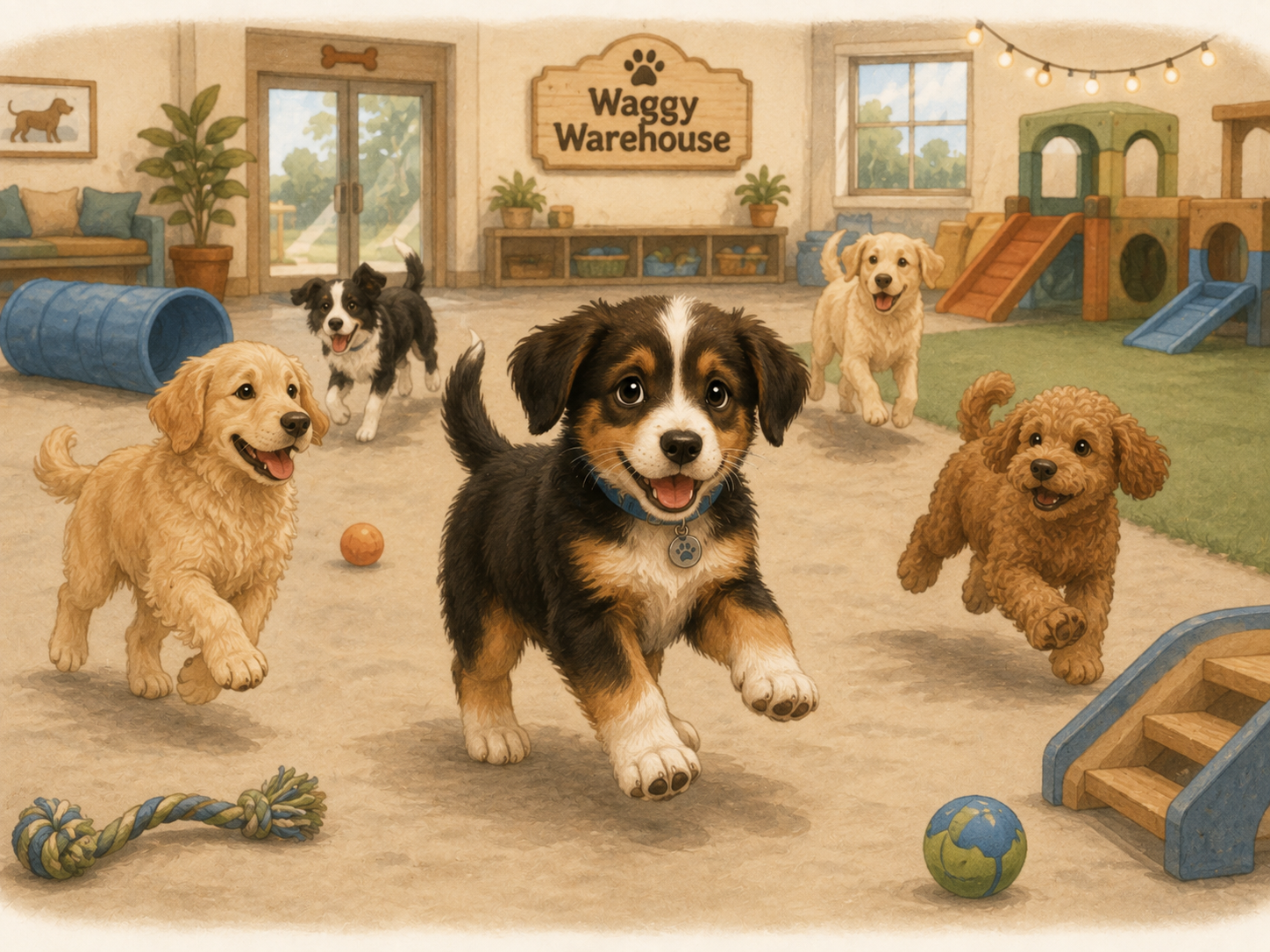

Puppy Socialisation: It’s About More Than Just Other Dogs
Bringing home a puppy is exciting, but those first few months are also an incredibly important time for helping them learn about the world around them.
When we hear the word socialisation, we often think about puppies meeting other dogs. And yes, learning how to interact appropriately with other dogs is important — but socialisation is so much more than that.
It's about helping your puppy grow into a confident dog who can experience everyday life without being worried by everything they see, hear and encounter.
The world is a big place when you're a puppy
Think about everything your puppy is going to encounter throughout their life that they've never seen before.
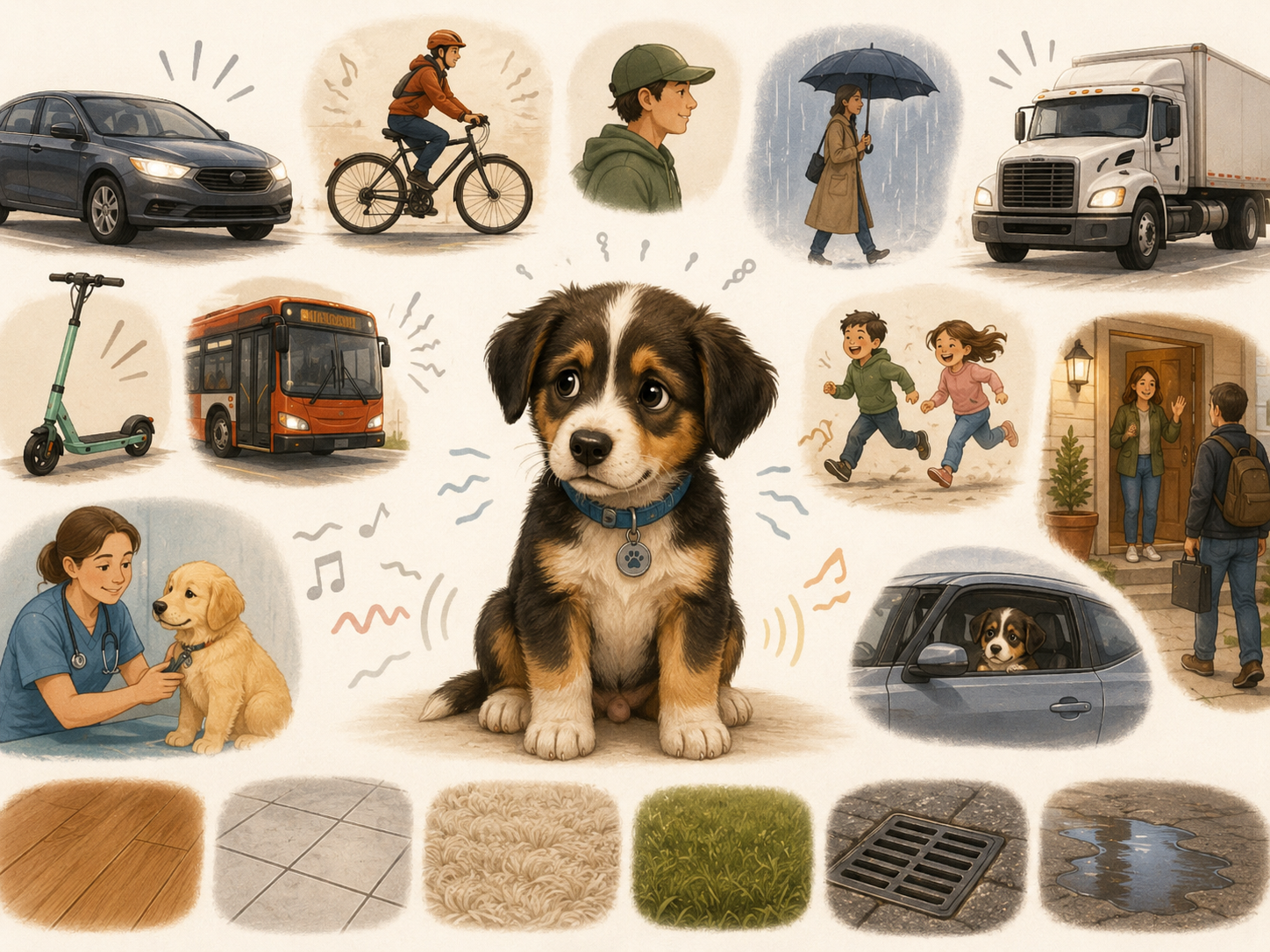
To us, these things are completely normal. To a puppy, they can be strange, exciting or even scary.
So where possible, let your puppy see and experience as much of the real world as you safely can, always taking things at their pace and following your vet's advice around vaccination and appropriate public outings.
You don't need to take them everywhere in one day. Small, positive experiences are much more valuable than overwhelming them.
Don't forget the noises!
Your puppy needs to learn that the strange noises around them are nothing to worry about.
Vacuum cleaners, hairdryers, washing machines, doors closing, traffic, people talking, things dropping and unexpected noises are all part of everyday life.
You can introduce new sounds gradually and positively.
There's no need to turn the vacuum cleaner on next to your puppy and hope they get used to it!
Let them hear it from a distance, remain calm yourself and allow them to investigate when they're comfortable.
The same goes for things that move unexpectedly.
Flapping bags, umbrellas opening, jackets being put on, bins moving, things blowing in the wind — all these little things can look very strange to a young puppy.
The more calmly they experience these things, the less likely they are to become a big deal later.
Get them used to being handled
This is one we really can't stress enough.
From a young age, gently get your puppy used to having different parts of their body touched and handled.
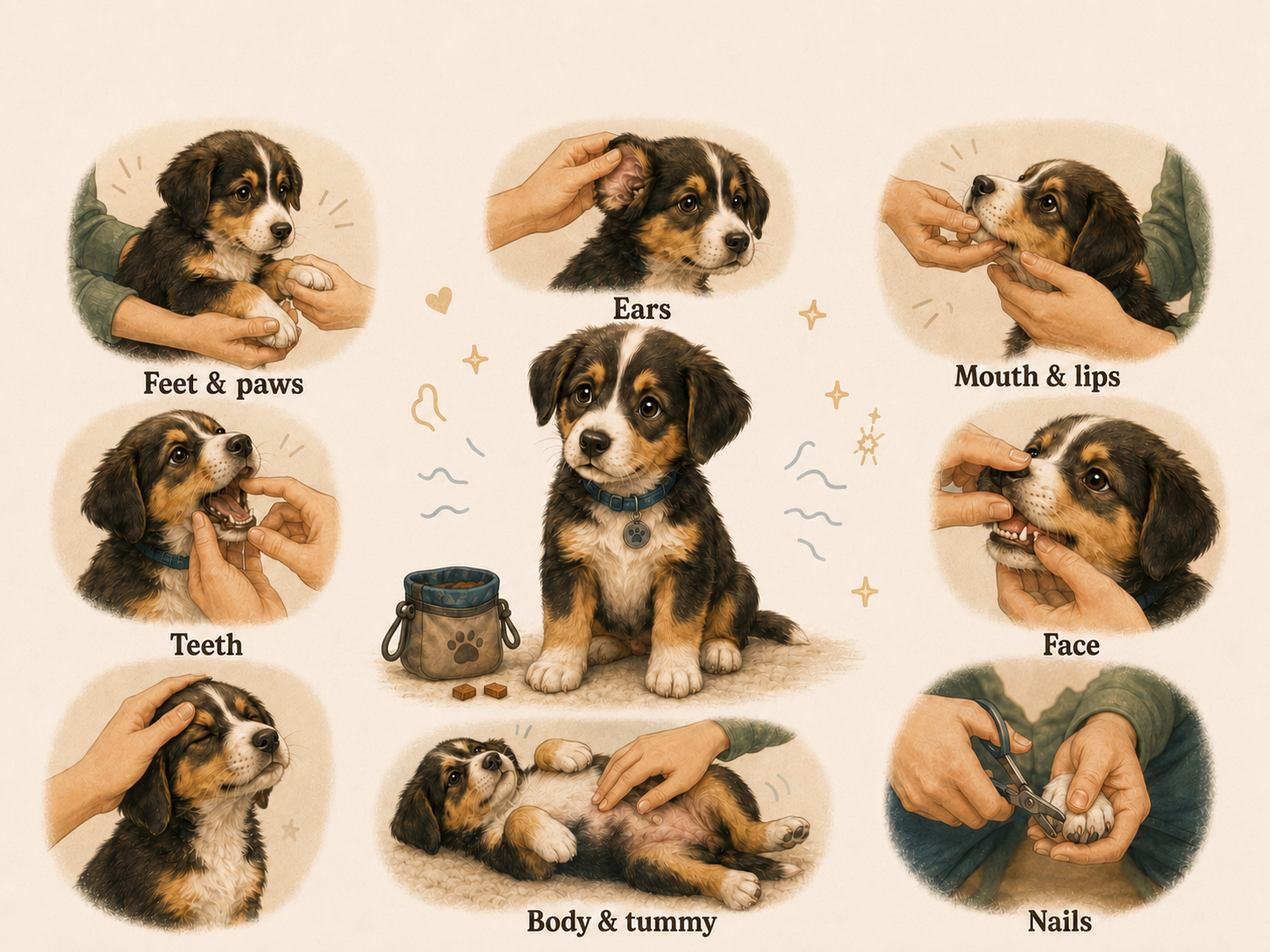
This isn't just about grooming.
One day a vet may need to examine their ears, look inside their mouth or check an injured paw. A groomer will need to handle their feet, face and body. You may need to inspect something that's worrying you at home.
If your puppy learns early on that being gently handled is normal, these experiences can be much easier for everyone.
Keep sessions short, gentle and positive. Reward them and stop before they become uncomfortable.
Don't forget the car
Not every dog naturally loves travelling in the car.
Get your puppy used to it early.
Start with short trips and gradually build up. They don't always need to be going somewhere exciting — sometimes a short trip followed by something positive is enough.
The aim is for getting into the car to become just another normal part of life.
Yes, other dogs are important too
Of course, puppies should have opportunities to experience other dogs in appropriate and safe ways.
But socialisation doesn't mean your puppy needs to meet every dog they see.
They also need to learn that they can see another dog without having to run over and say hello.
Learning to calmly watch another dog walk past is a really valuable skill too.
Good socialisation is about helping your puppy understand how to exist comfortably in the world, not turning them into the dog who thinks every person and every dog is there for them to greet.
Don't overwhelm them
This is probably the most important part.
Socialisation isn't about throwing your puppy into as many experiences as possible and expecting them to cope.
Watch their body language.
If they're unsure, give them space.
If something is frightening them, don't force them closer.
Let them observe from a comfortable distance and build their confidence gradually.
We want them to learn:
"I've seen that before. That's okay."
Not:
"That was terrifying and I couldn't get away."
Every puppy is different. Some will confidently investigate everything, while others need a little more time and encouragement.
That's okay.
Your puppy socialisation checklist
There are so many things you can introduce your puppy to, but here are a few to get you started:
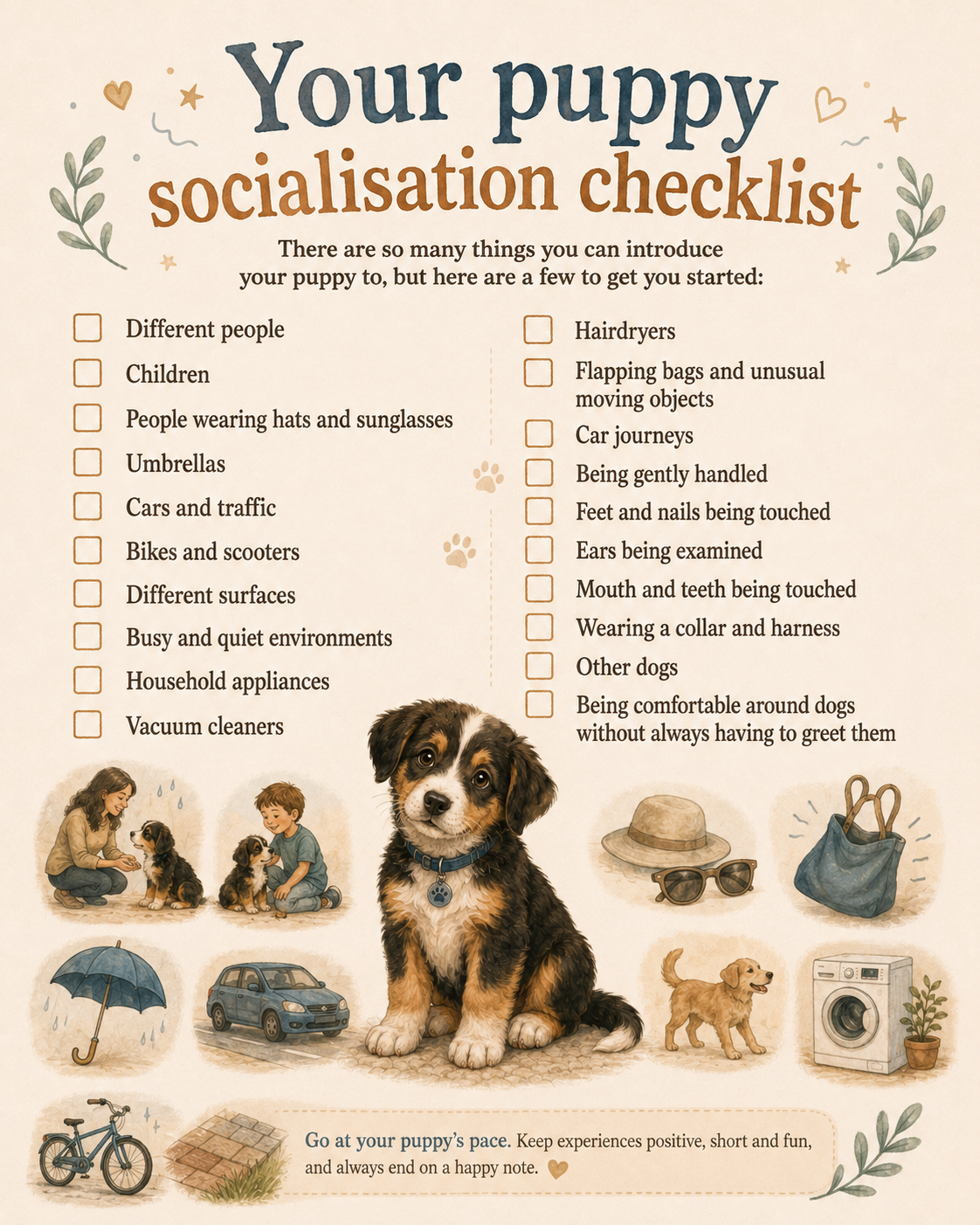
And remember, you don't have to tick everything off in a week!
Socialisation is an ongoing process. Keep giving your puppy positive experiences as they grow and develop.
From all of us at Waggy
We see every day how much a confident, well-socialised dog can benefit from those early experiences.
And while meeting other dogs is certainly part of growing up, the world is so much bigger than the dog park.
Give your puppy the opportunity to see it, hear it, smell it and experience it — safely, positively and at their own pace.
Because you're not just raising a puppy.
You're helping them learn how to navigate the world they'll live in for the rest of their life.